Idaho Winter Prep: Wool, Tilt, and Honey Stores
How I prepare my Idaho beehives for winter — two deeps and a medium of honey, sheep's wool insulation in a quilting box, a forward tilt for moisture drainage, and why October matters more than December.
The hive doesn't die in January. It dies in November — from moisture, not cold.
This is the single most important thing I've learned about beekeeping in Idaho: cold doesn't kill healthy colonies, condensation does. The cluster in a properly fed, mite-treated, well-insulated hive can survive temperatures colder than most people realize. What kills them is cold water dripping from the inner cover onto the cluster, combined with the damp chilling the bees past their ability to rewarm.
Here's my routine. I run it starting in late September and it's usually done by mid-October.
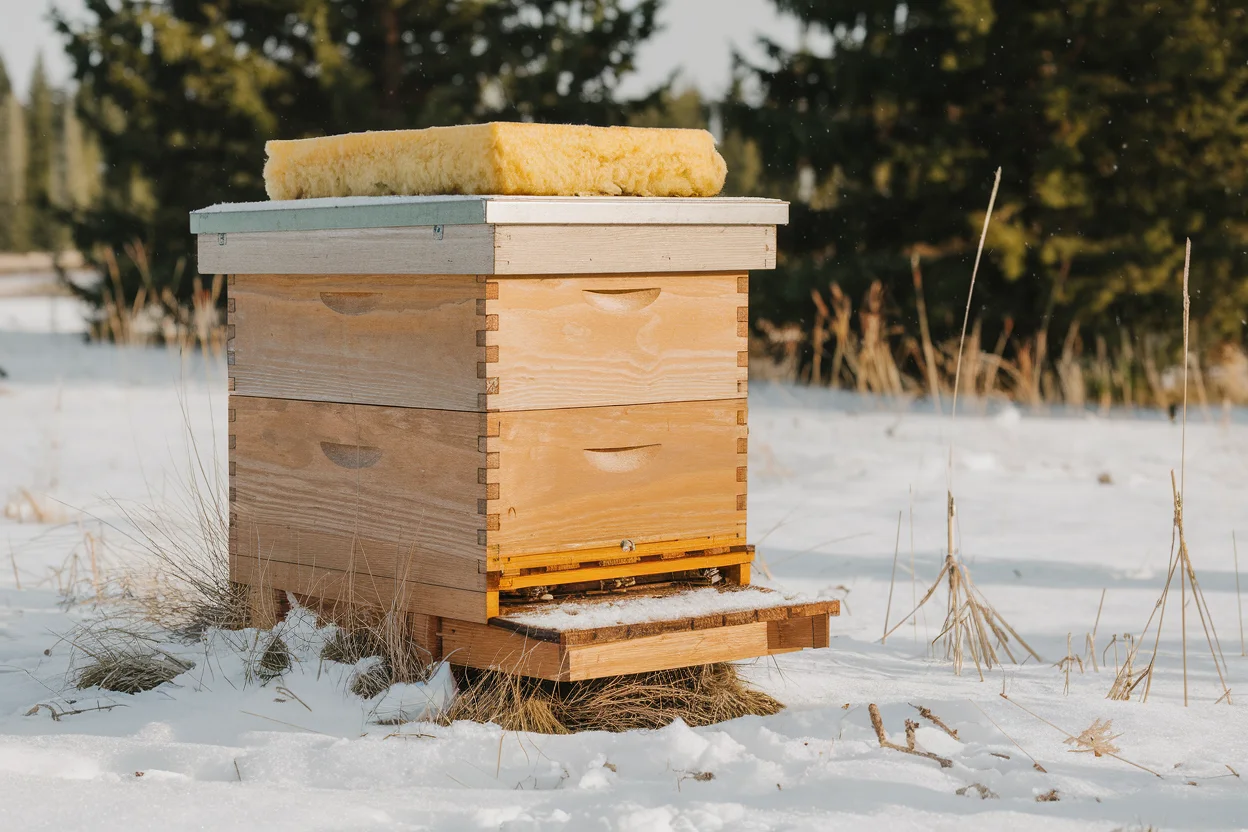
Step 1 — Confirm stores
Before anything else, the hive needs enough food. My target for Twin Falls and Magic Valley elevations:
- Two deep boxes fully packed with honey (or the Layens equivalent)
- Plus one medium of honey on top
- Plus whatever brood the queen finishes on in the fall
If they're light, I don't top them up with syrup — syrup in late September can turn to watery, fermentable junk. I use dry sugar or fondant placed on top of the frames under the inner cover. The bees cluster up into it on warm days and consume it as needed.
How to check without opening
Heft the back of the hive. A well-provisioned hive feels heavy — you should struggle to lift it an inch off the bottom board. A light hive needs supplemental feed.
Step 2 — Mite check (last one before winter)
If you haven't treated by late September, you're already late. I do my last Apilife Var or Apiguard application in late August through mid-September. By October the strips are out and I'm watching drop counts.
If mites are still present in the winter bees going into cluster, you will lose the colony. No insulation, no feeding, no insulation can save a colony that raised winter bees with mites feeding on them. See my varroa treatment rotation post for the schedule.
Step 3 — Sheep's wool insulation
This is the trick that changed my wintering success the most.
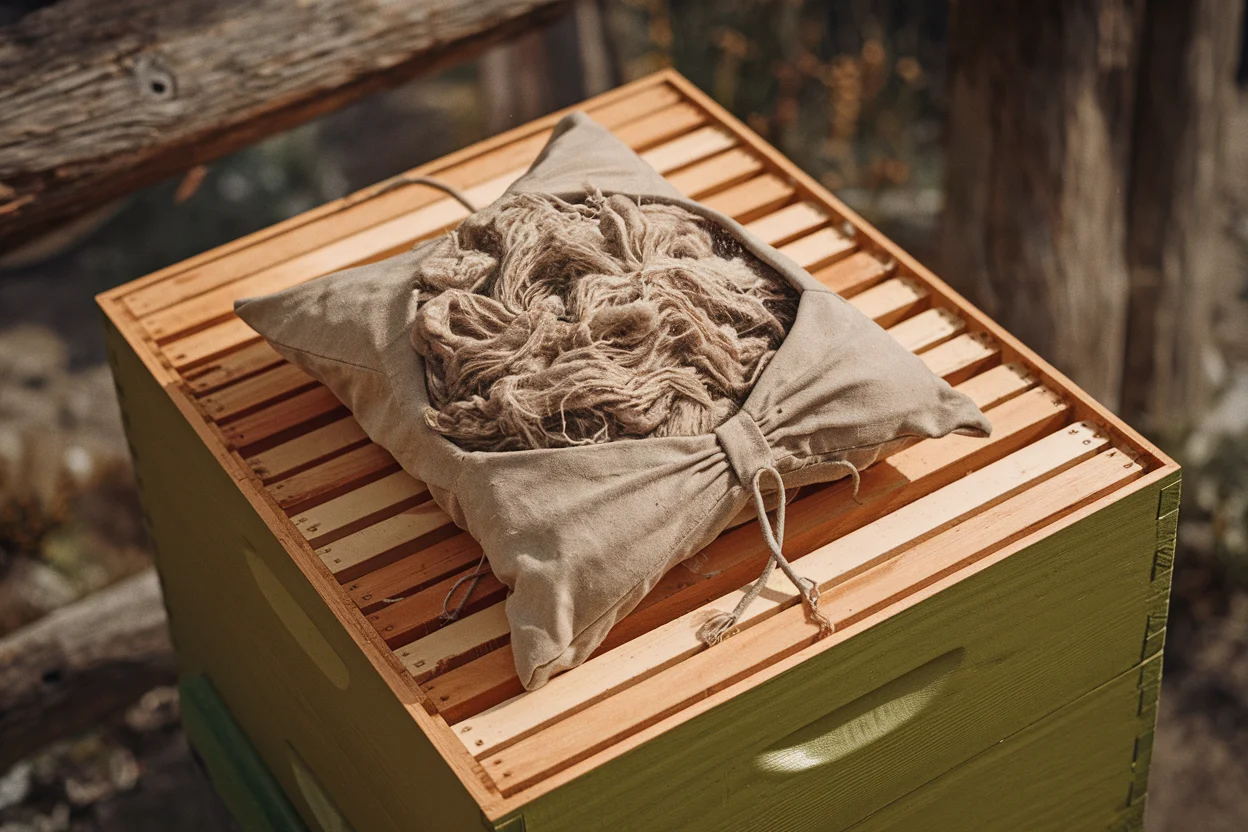
I take an empty medium box (or a dedicated shallow box) and place it on top of the hive. Inside the box I stuff a pillowcase full of raw sheep's wool. Regular pillowcase, regular sheep's wool from a local farm (I buy from a Mennonite family that sells nucs too). Pack it tight. Put the inner cover and outer cover back on.
What wool does:
- Absorbs condensation. When the cluster's warm breath meets the cold top of the hive, it condenses. With wool above, the wool soaks it up instead of dripping onto the cluster.
- Insulates. Sheep's wool is nature's insulation — it works even when wet.
- Dries back out in spring. I remove the wool in March, air it in the sun, and reuse it for two or three winters before replacing.
Why not cedar shavings?
People use cedar or pine shavings for the same purpose. They work. They just don't absorb moisture as well as wool and they break down faster. If wool isn't available, shavings are fine. Newspaper is the budget option.
Step 4 — Forward tilt
Tilt the hive forward (toward the entrance) by 1–2 degrees. A small wedge under the back of the bottom board does it.
Why: any condensation that does run down the inside walls ends up at the front of the hive, not the back. It can drip out the entrance or be cleaned up by the bees. It never reaches the cluster in the middle.
Step 5 — Mouse guards
I install 1/4" hardware cloth across the lower entrance once the bees have slowed down (usually first week of October). Mice love a warm, dry, food-filled hive. Guards keep them out while still letting bees through.
Step 6 — Leave them alone
From November through February, I do not open the hive. I listen at the entrance on mild days — the faint hum of a healthy cluster is audible if you put your ear near the opening. I heft the back periodically to check stores.
The only time I'd crack the lid in winter is if I need to slide fondant in because they're running low. Even then, I do it on a sunny day above 45°F, fast, with a clear plan.
Step 7 — Spring check
First real inspection in March on a warm day (50°F+). I confirm:
- Queen is laying (eggs, young brood)
- Stores are adequate for the hungry gap (April can be tougher than February)
- No mold, no excess dead bees, no signs of disease
If the hive is alive in March, you've done the hard part. Spring buildup from that point is the colony's job.
The nine words that changed my wintering
Dr. Leo Sharashkin summarized hive winter prep better than anyone else I've read: "Healthy bees, full stores, dry top, forward tilt, patience."
Everything I do above is in service of those nine words. Do them each year and most of your colonies will make it.
— Maggie